

November 19, 2026
EV fleet management is the management of charging, cost and data for electric company cars, on top of the contract, driver and supplier work that any fleet requires. It brings cost lines a petrol or diesel fleet does not have, data that has to be captured before it can be reported, and reimbursement decisions that depend on local rules.
These are not future concerns. According to ACEA's press release of October 2026, battery-electric cars took 22.7% of new car registrations in the EU from January to September 2026, up from 16.1% in the same period a year earlier. For a fleet buying or leasing new cars in Europe, electric company cars are already arriving.
This article covers what changes from a petrol or diesel fleet: charging and reimbursement, the new cost lines and how to check them, range and utilisation, company car tax, and emissions records.
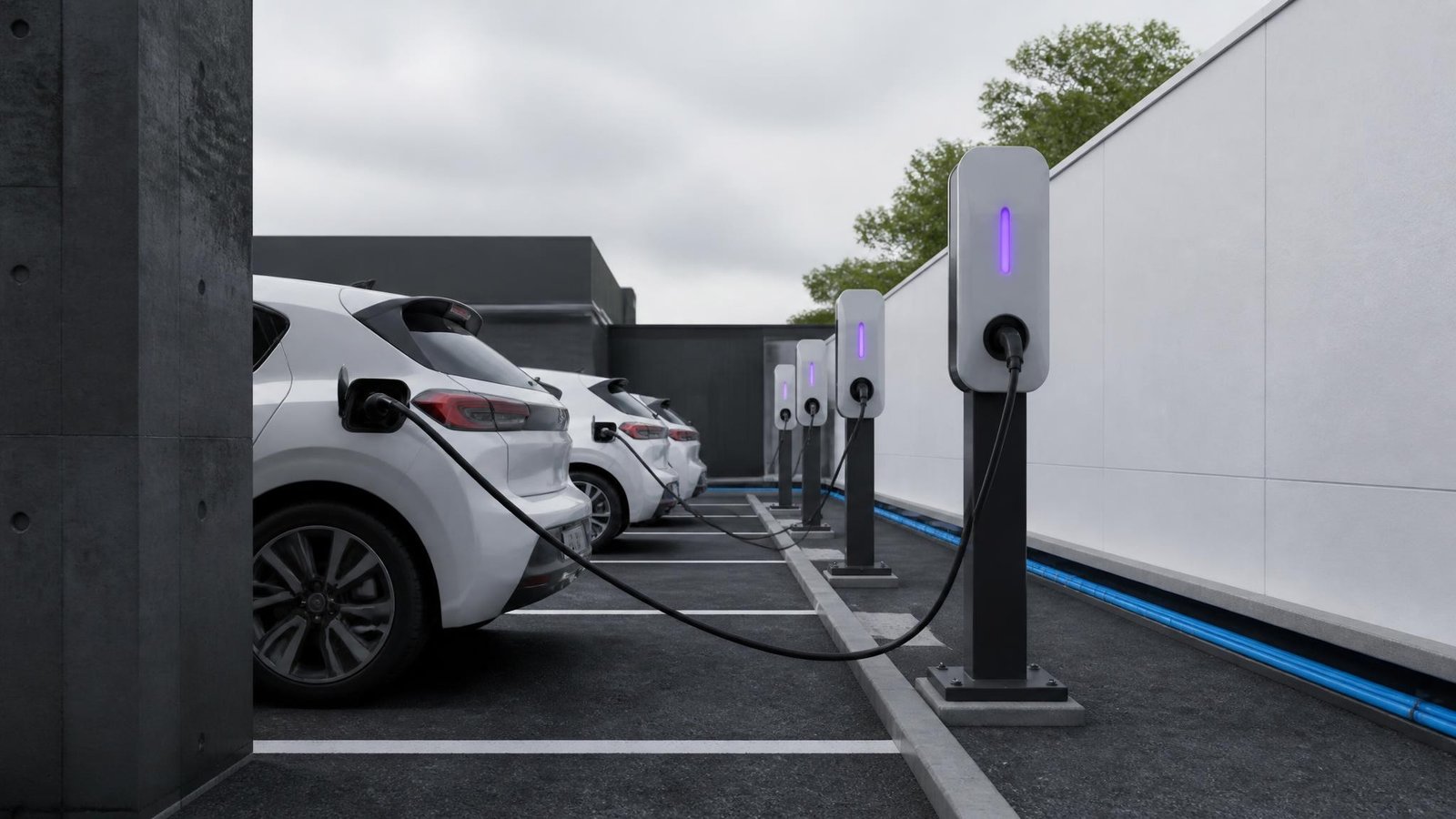
EV charging creates three cost streams, each billed by a different party and each checked in a different way.
Home charging. The driver pays the domestic energy bill and the employer reimburses the electricity attributable to charging the company car, not the household bill. Which charging is reimbursed depends on the employer's policy: where a company car has permitted private use, private kilometres may be part of the arrangement rather than an exception. How reimbursement is calculated and taxed varies by country, and local rules apply.
Workplace charging. The charging point operator or the building's energy supplier invoices the employer. To allocate that cost to vehicles and drivers, the employer needs a session log showing which vehicle charged, when, and how much energy it drew. Without one, workplace charging sits as unattributed overhead.
Public charging. A charge card or account is billed to the employer centrally, or the driver claims the cost as an expense. Each transaction is checked against the vehicle, the driver and the charging policy.
Most drivers use more than one location, and the split feeds reimbursement, workplace cost allocation and the emissions calculation. Joining the three streams per vehicle makes total energy cost per car visible.
Countries handle home charging differently. Some publish an approved rate per kWh, some expect evidence from the driver's energy bill, and some leave the method to the employer. Local tax and legal advice applies in each case.
Three decisions belong in the car policy before the first claim arrives:
A fixed rate is simpler to run but can over- or under-pay against the driver's real tariff. Reimbursing the actual tariff is more accurate but asks more of the driver and the approver. Paying above what local rules allow can create a taxable benefit, so payroll needs the same answer the fleet manager uses.
An electric company car fleet has cost lines that either do not exist in a petrol or diesel fleet or arrive in a different form. Each one needs evidence, an owner and a defined check.
| Cost line | Evidence | Owner | Validation check |
|---|---|---|---|
| Public charging | Charge card statement per session: kWh, location, time, card ID | Fleet manager | Card belongs to the car's driver; kWh fits the battery size and distance driven; session falls within the charging policy |
| Home charging reimbursement | Driver claim with meter or smart charger reading, or bill | Fleet manager approves, payroll pays | kWh fits the distance driven and the car's consumption; period not claimed before; rate within local rules |
| Workplace charging | Operator or energy supplier invoice, plus the session log | Facilities, with finance | Invoiced kWh equals the sum of logged sessions; every session assigned to a vehicle |
| Site energy contract | Energy supplier invoice and charger sub-meter readings | Facilities and finance | Tariff matches the contract; charger energy separated from the building's own use |
| Lease or rental | Lease contract and monthly invoice | Fleet manager and finance | Rental, term and contracted kilometres match the contract; excess kilometre charges are supported by odometer data |
| Maintenance and tyres | Supplier invoices | Fleet manager | Work is covered by the maintenance package or approved separately; no duplicate invoices |
| Company car tax (benefit-in-kind) | Tax category per vehicle under local rules | Payroll, with the fleet manager | Category matches the vehicle and current local rules |
The lease line deserves a note. Uncertainty about what an electric car is worth at the end of the lease often leads lessors to set more conservative residual values, which raises the monthly rental. The check is the same as for any lease; the risk behind the price is different.
These lines arrive on different cycles from different suppliers. Holding them in one vehicle record in a fleet management system, rather than across expense, payroll and accounts payable systems, is what makes total cost per car answerable. OviDrive's fleet management platform consolidates fleet and mobility data into a unified format and runs line-by-line cost scrutiny and allocation against vendor files, cost centres and accounts payable.
A charge card transaction gets three checks: the session was made with the card issued to that car's driver, the session is within the employer's charging policy, and the energy is consistent with the car's consumption and the distance driven. Where private use is permitted, a session near the driver's home or on a weekend is not an exception in itself; the policy decides how it is treated.
Charging sessions are frequent and low in value, so reviewing every line by hand is impractical. Comparing total energy per car per month with the distance driven is one screening check: it flags unusual consumption for review. It does not show whether the price is right, so a separate price and fee check compares per-kWh prices, roaming and session fees and subscription charges against the contract or card terms. Fleet FinOps, the financial management discipline of identifying, validating, recovering and optimising fleet spend using operational, contractual and financial data, applies the same logic to charging and lease invoices alike, as described in checking charging and lease invoices against the contract.
Take an illustrative month for one car:
Recorded energy is 76 kWh above the tolerance. Before treating energy bought as energy used, the fleet manager checks the battery's state of charge at the start and end of the month: a car that ends the month fuller than it started has bought energy it has not yet used. If the gap remains, the next step is to compare all three sources rather than assume the largest is wrong: card sessions against the card statement, workplace sessions against the site log, and the home claim against the charger's session history or meter readings. Possible explanations include a second household car on the same home charger, a claim or invoice that overlaps the previous period, a card used for another car, or a meter reading error. Payroll holds or adjusts the reimbursement until the fleet manager closes the exception, and the outcome is recorded against the car.
Certified range is a poor guide to whether a car suits a driver. Real-world range falls with cold weather, sustained motorway speeds, payload and driving style.
Fit is judged from actual data: kilometres per working day, the longest regular journey, and where the driver can charge during the day. The data raises questions rather than answering them:
All of this needs odometer or telematics kilometres held alongside the contract record.

Many countries tax electric company cars more lightly than petrol or diesel equivalents, through a lower taxable value or a lower rate. The rate, the calculation and any transitional rules are set nationally and change independently, so a multi-country fleet confirms the position in each country where drivers are based.
The tax affects both the employer's cost of provision (through social contributions or equivalent) and the driver's net cost, so it belongs in the EV business case. Recording each car's tax category under local rules gives payroll the right input and shows when a car's position changes.
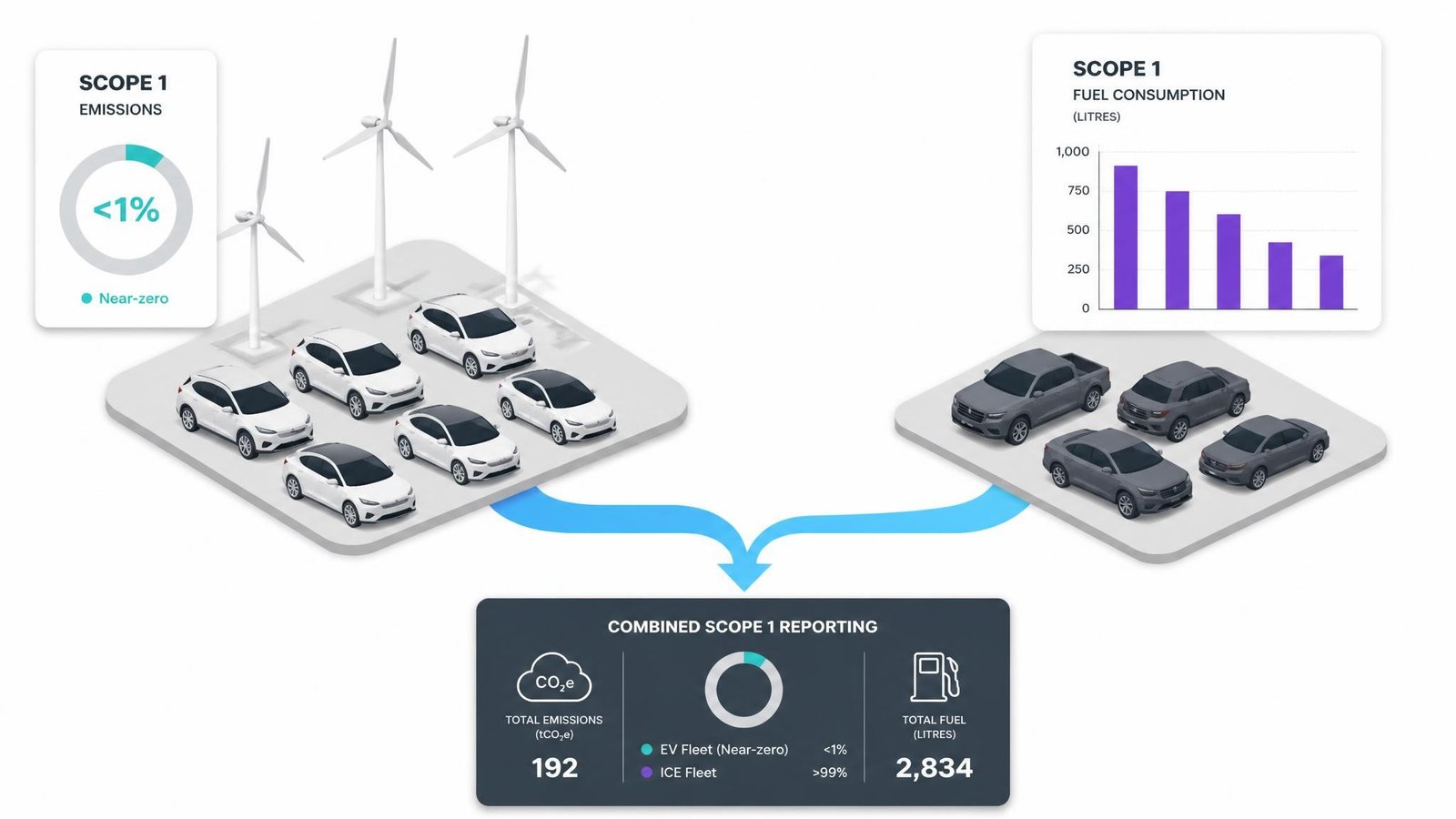
An electric car has no tailpipe emissions, so its direct emissions at the point of use are zero. The emissions sit in the electricity used for charging.
How that electricity is reported depends on the reporting boundary. Under the GHG Protocol Corporate Standard, a company chooses a consolidation approach (equity share, financial control or operational control), and that choice, together with the type of lease, decides whether a leased car's charging falls into Scope 2 or into Scope 3 as an upstream leased asset. Home charging paid by the driver and reimbursed is treated differently by different reporters. The treatment has to follow the accounting and reporting requirements that apply to the company; it is then documented and applied consistently.
The core input is kWh per vehicle per period, split by charging location, and where possible the emission factor for each source: grid average for the country, or a supplier-specific factor. A renewable tariff alone does not qualify for a market-based factor: the contractual instrument behind it has to meet the quality criteria in the GHG Protocol Scope 2 Guidance. Gaps are normal. Where a car's charging energy is missing, estimating it from distance and consumption is acceptable practice, provided the method, the data sources and the uncertainty are documented. A mixed fleet also needs fuel data for its petrol and diesel cars in the same reporting structure. More detail is in fleet sustainability and greenhouse gas reporting and the sustainability data challenge.
The European Commission proposed in December 2025 that each EU Member State set a minimum share of zero- and low-emission vehicles among new corporate car and van registrations by large companies. The proposal is still being negotiated, and no targets or dates have been adopted. Once it is adopted, take local legal advice on whether your organisation falls within scope. Progress is tracked on the European Parliament's Legislative Train and the European Commission's automotive package page.
Separately, Regulation (EU) 2025/1214, adopted in June 2025, lets car manufacturers meet their 2025 to 2027 CO2 targets as a three-year average. These are manufacturer targets, not fleet targets, but they shape which new cars are available and at what price.
The number of charging transactions grows with every electric car added, so these records are easier to set up now than to rebuild later:
For each record, note which system holds it today and who owns it. Any record without an owner is a gap to close before the EV share grows. See how OviDrive supports EV fleet management.
For savvy fleet managers looking for the latest trends and opportunities to improve their fleet's performance.


Copyright © OviDrive Group of Companies • Made with 💜 in Australia 🦘 • Operating in 36 countries and 3 continents 🌎
