
November 18, 2026
Telematics and fleet management software are often sold under the same name, but they do two different jobs. Telematics collects signals from the vehicle: location, distance, speed, driving events. Fleet management software manages the business records around it: the driver, the contract, the supplier, the invoices, the cost. Because the telematics industry routinely calls its own products "fleet management", it is hard for a global fleet manager, or someone in HR or finance who has inherited the fleet, to know what they are buying.
Think of them as two capabilities rather than two product boxes: collecting vehicle signals, and managing the records your business is responsible for. Some platforms do both. Most company-car fleets need the second; the first is worth adding when the data will be used, and can deliver additional value when it is connected to the contracts, invoices and responsibilities the fleet already manages.
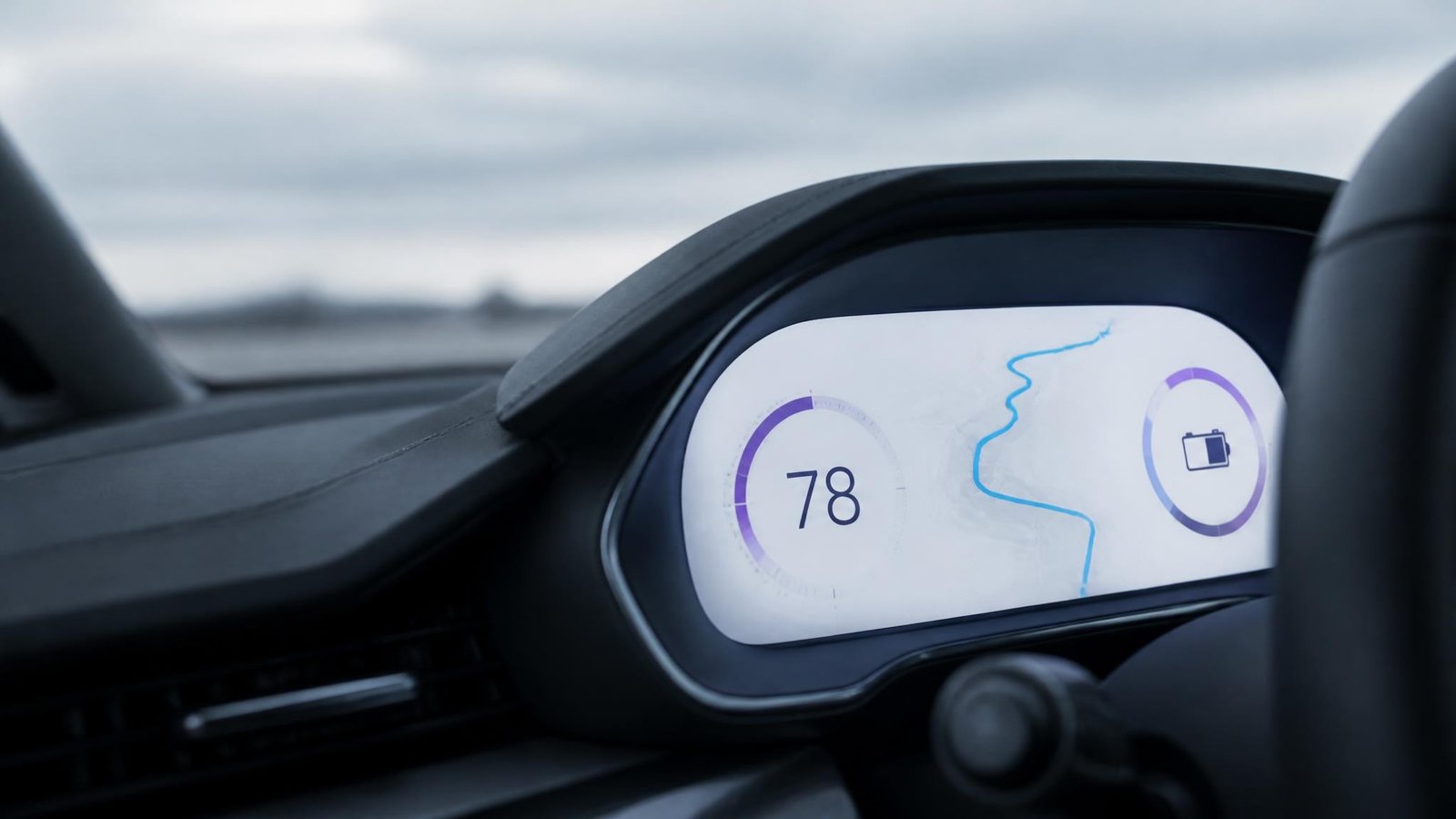
A telematics device, fitted afterwards or built in at the factory, records GPS location, speed, distance travelled, harsh braking and acceleration, engine idling and fuel consumption, and sends it to a back-office application, typically in near-real-time. Connected cars can transmit data through built-in connectivity: remote diagnostics, door and lock usage, battery state of charge for electric vehicles, and other onboard signals. Aftermarket telematics devices can access vehicle data through the OBD port and transmit it separately.
That data is useful on its own. Idling and fuel figures show where fuel is wasted. Driving events point to vehicles or routes that need attention. Diagnostics and actual distance help schedule maintenance on real use rather than a fixed calendar.
Vehicle signals alone do not provide the complete commercial record: lease terms, renewal dates, supplier invoices and total vehicle costs.
Fleet management software holds vehicle registration and specification, driver assignment, lease or contract terms, supplier relationships, maintenance schedules, and cost and invoice data. It answers the questions a company-car fleet raises every month. When does this contract end? What distance allowance was agreed? What has this vehicle cost? Is this invoice correct?
For many company-car fleets, these records do their job without any telematics: renewals, invoice checks, cost reporting and supplier management all run on contract and cost data.
The telematics industry commonly uses "fleet management" for its own products, so a buyer looking for contract and cost management may be shown a tracking system, and the other way round. Industry research uses the same vocabulary: Berg Insight's November 2025 Fleet Management in Europe report defines a fleet management solution as "a vehicle-based system that incorporates data logging, satellite positioning and data communications to a backoffice application". That describes telematics. It is not wrong, just narrower than what a company-car fleet manager usually means.
The labels matter less than the capabilities behind them. Some platforms collect vehicle signals and also manage contracts and invoices; others do one and connect to a system that does the other; others do only one. The useful question is whether the platform connects vehicle activity to the contracts, invoices and responsibilities your fleet manages.
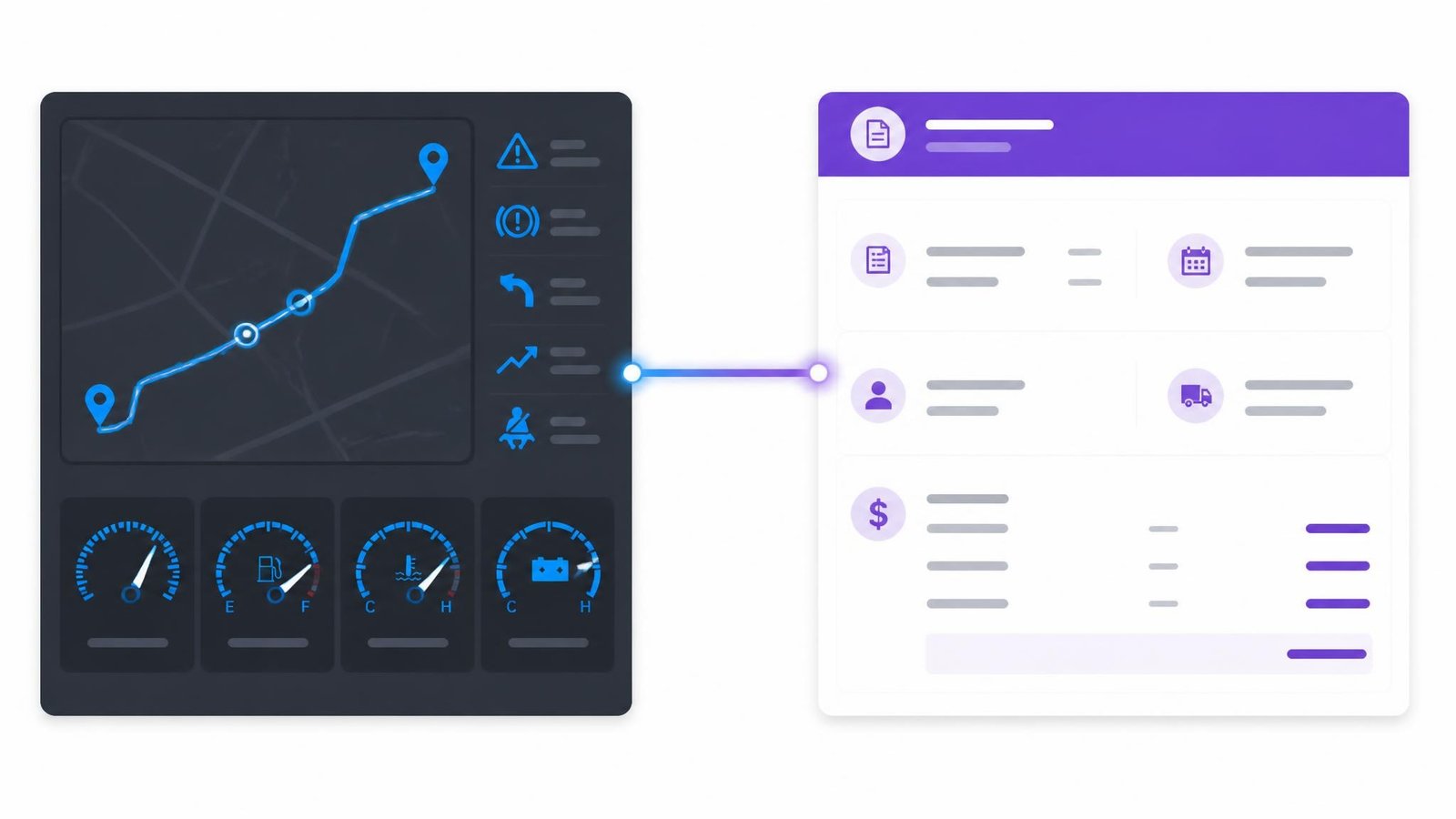
Some questions need both. Excess mileage is the clearest case. A lease sets a distance allowance and a rate for every kilometre above it. The allowance sits in the contract; the distance comes from the vehicle. Compare the two during the lease, not only at return, and the fleet manager can act before an excess mileage charge builds up.
Take an illustrative car: a 48-month lease with a contracted allowance of 120,000 kilometres, which works out at 2,500 kilometres a month. After 18 months, the odometer reads 54,000 kilometres, an average of 3,000 a month. If that pace continues, the car will finish the lease at 144,000 kilometres, 24,000 over the allowance. With an excess rate of 0.10 per kilometre in the contract's currency, the projected exposure is 2,400. Found at month 18, there are 30 months left to act: move the car to a driver who covers less distance, ask the lessor whether the allowance can be adjusted, or budget for the charge. Found at return, there is only the invoice.
Telematics automates the distance feed, so the projection updates without anyone asking for a reading. It is not the only source. Odometer readings submitted by drivers, or taken from other records such as service visits, support the same comparison, just less often.
Private and business mileage work similarly. Where local rules require the employer to separate the two, distance data has to be matched with calendar, booking or driver records, because distance alone does not say why a trip was made.
The same connection helps with invoices. Matching vehicle data to invoices lets the fleet manager check that a supplier's charge reflects the vehicle's actual use and the contract terms. With fleet data centralised, automated checks can flag the exception without anyone having to look for it.
Many company-car fleets run with little or no telematics, and their contract and cost records cover most of the work. Telematics adds value for specific needs: automated distance tracking, driving event monitoring, fuel and idling analysis, and connected-car diagnostics.
The person who runs the fleet alongside an HR or finance job, and has been told they need telematics, can start from their own question: how do I run this fleet properly without it taking over my job? Usually the first answer is getting vehicles, drivers, contracts and costs in order. OviDrive Essentials is a global fleet management SaaS designed to unify fleet data, and its mobile app lets drivers record odometer updates, so mileage can be checked against the contract before any telematics is in place.
The first is cost: devices, installation and subscriptions. For leased company cars, the return depends on whether someone uses the data to cut fuel waste, plan maintenance or check mileage against contracts.
The second is reports that sit unread. The value lies in what is done with the data, not its volume.
The third is employee privacy. GDPR Article 4(1) lists location data as one of the identifiers that can make a person identifiable, so tracking vehicles that employees drive creates legal obligations for the employer. How employers may monitor employees differs by country; local rules apply, and employers should take their own legal advice first.
For connected cars there is a further point: by default, the data the car generates is typically held by the manufacturer or the telematics provider rather than the fleet, so a fleet leasing a connected vehicle may not have straightforward access to it.

In the EU, the Data Act has applied since 12 September 2025. It gives users of connected products, meaning anyone who owns, rents or leases one, a right to access the data their use generates, free of charge.
The right is narrower than "all the car's data". It covers raw and pre-processed data generated by using the product that is readily available to the data holder. Inferred or derived data is out of scope, and a data holder can refuse or limit sharing in defined cases, for example to protect trade secrets or the product's security. Where the data includes personal data, such as the location of an employee driving a company car, it can only be made available with a valid legal basis under data protection law.
So a fleet leasing connected vehicles in the EU can request the vehicle data its use generates and set it against contracts and invoices. What is available, how often and in what format depends on the manufacturer and the vehicle, so it is not a like-for-like replacement for a fitted telematics device. Outside the EU, check whether equivalent rights exist; local rules apply.
Fleet management software is the starting point for most company-car fleets. Without reliable records of vehicles, drivers, contracts, suppliers and costs, renewals, invoice checks and mileage exposure are hard to manage, with or without vehicle data.
Telematics is worth it when you will use what it collects: to cut fuel waste and idling, plan maintenance on actual use, investigate driving events, or automate the mileage feed instead of collecting odometer readings by hand.
Whichever platform or combination you choose, check whether it connects vehicle activity to the contracts, invoices and responsibilities your fleet manages. See OviDrive's fleet management software and Managed Services for teams that want help bringing the two together.
GPS location, speed, distance travelled, driving events such as harsh braking, acceleration and idling, and fuel consumption. Connected cars also transmit remote diagnostics, door and lock usage, and battery state for electric vehicles.
Not necessarily. Many company-car fleets run with little or no telematics, using contract and cost records plus odometer readings from drivers or other records to track mileage. Telematics is worth adding when the fleet will use what it collects.
The main ones are the cost of devices and subscriptions, which only pays back if the data is used; reports that nobody acts on; employee privacy obligations, since location data about an employee is personal data under GDPR Article 4(1) and local rules govern how employers may use it; and, for connected cars, limited default access to the data the car generates.
Telematics collects signals from the vehicle. Fleet management software manages the business records: contract, driver, supplier, cost and invoice data. Some platforms combine both, so check which capabilities a platform actually has. Our fleet management system article covers the business records in detail.
For savvy fleet managers looking for the latest trends and opportunities to improve their fleet's performance.


Copyright © OviDrive Group of Companies • Made with 💜 in Australia 🦘 • Operating in 36 countries and 3 continents 🌎
