
November 4, 2026
A lease ended in March, but the renewal decision sat in a spreadsheet tab nobody opened, so the car rolled onto an unplanned extension. Three months later the lessor's final invoice included an excess-mileage charge that nobody compared with the contracted kilometres before it was paid. Neither problem needed specialist knowledge to prevent. Both needed the right record in front of the right person at the right time.
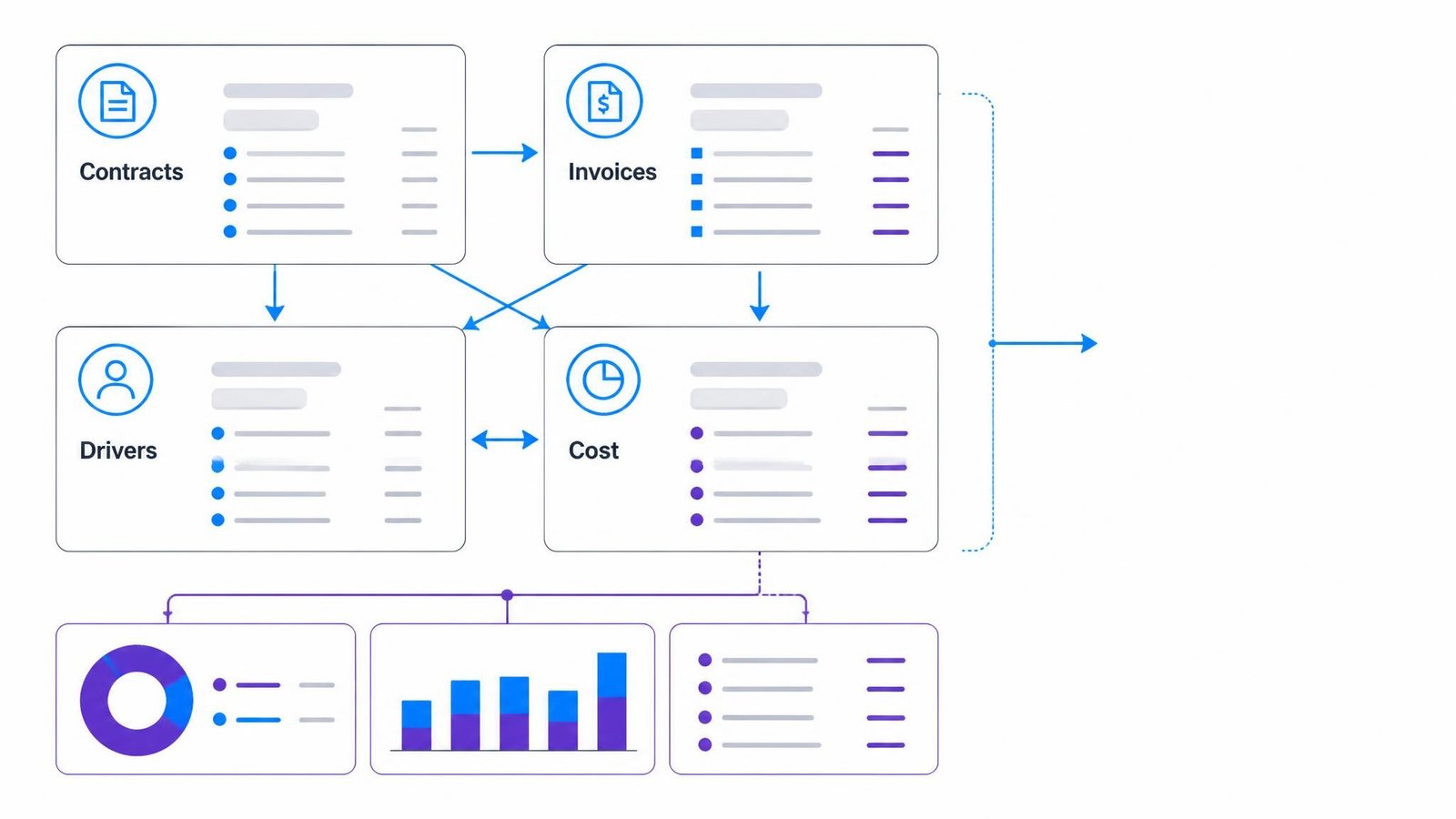
A fleet management system is software that holds the records an organisation needs to run its vehicles: the vehicles themselves, the drivers, the contracts, the costs and the documents, together with the processes built on them, such as maintenance, safety and compliance checks, policy, invoicing and reporting. Systems differ widely in what they cover. Some centre on telematics and vehicle operations; others on contracts, invoices and cost.
For a company-car fleet, the financial and administrative side tends to matter most, because most of the cost and most of the admin sits in leases, invoices and driver changes. This article is for two readers: the person in HR, finance or procurement running a fleet alongside another job, and the category manager who needs to explain and control fleet spend across a larger or more complex fleet. It covers what a system should hold, the admin it can take over, what data quality means in practice, how it compares with a spreadsheet, and what finance should expect from it.
For a company-car fleet, five groups of records do most of the work.
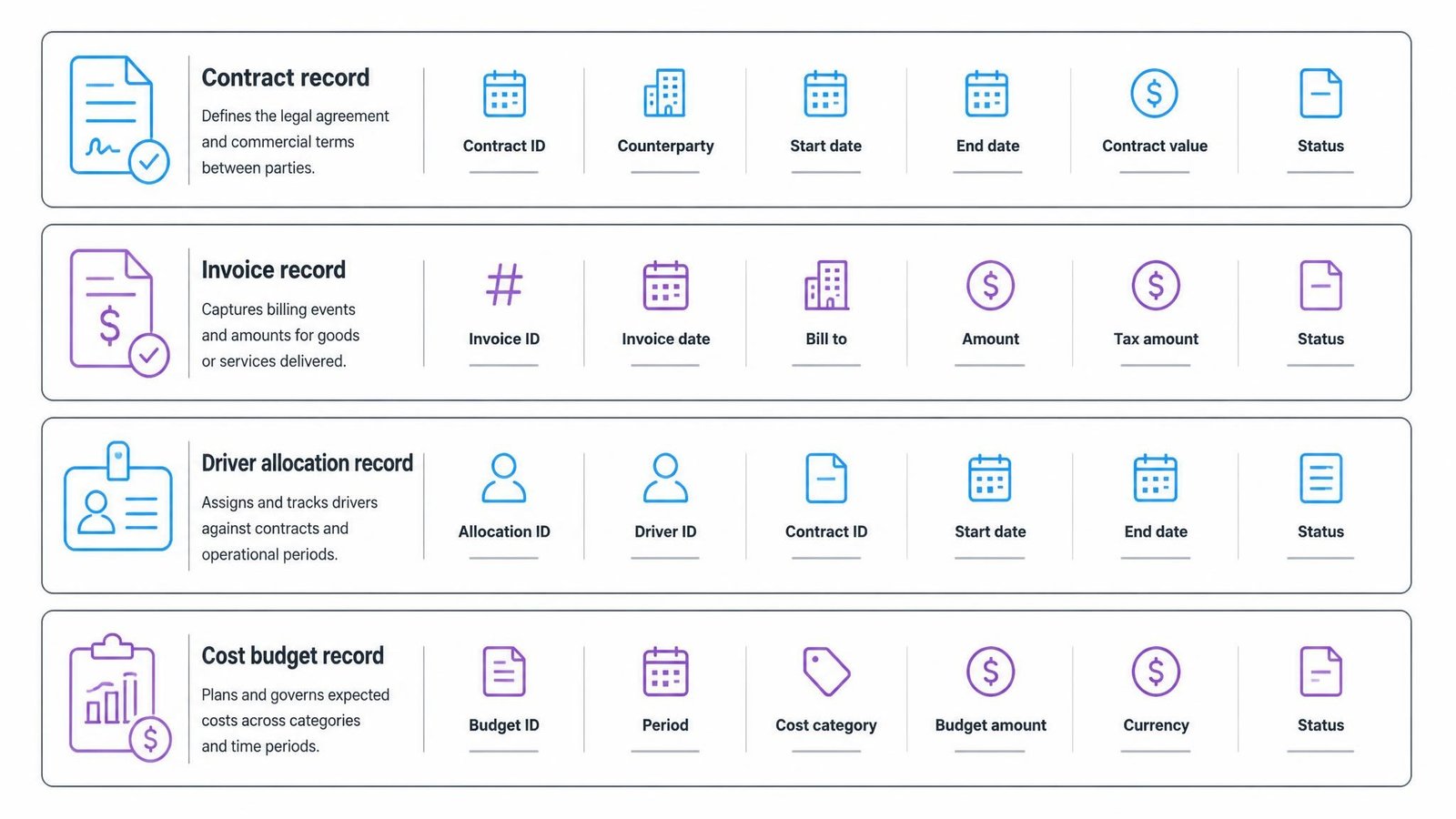
Vehicle records. Registration, make and model, specification, status, and the documents and service history that go with each car. Everything else links to these.
Lease and purchase contracts. Contracted kilometres, duration, monthly rental, return conditions, the excess-mileage rate and the end date for every vehicle, including any amendments. The contract is the reference for checking invoices: if it is missing or out of date, a charge cannot be checked reliably against it.
Invoices. Lessor rentals, fuel, maintenance and repairs, and fines, each linked to the right vehicle and period. Depending on the system, charges can be compared with the contracted rate or an approved amount before they reach accounts payable. Where a charge differs, a person decides whether it is an approved exception, a legitimate separate charge or something to dispute.
Drivers and allocations. Each driver's vehicle history, policy entitlement, licence check status, cost centre and any recharge arrangements. A change of driver or vehicle is the event that should update cost-centre coding, benefit reporting data and, where needed, insurance.
Budgets and costs. Budgets at vehicle, department or country level, with actual spend recorded against them.
Telematics, where a fleet uses it, is another data source alongside these records. Many company-car fleets work with little or none of it; the contract and cost records are harder to do without.
Those records become useful when they take over specific tasks that are otherwise done by hand.
End-of-lease tracking. The system tracks contract end dates and notice or decision windows, and compares kilometres driven with the contracted allowance, so the fleet manager is alerted while there is still time to review mileage and contract options. What those options are depends on the agreement. Checking end-of-lease damage charges relies on the same contract data.
Recharges to employees. Where employees contribute to private fuel, personal mileage or a vehicle upgrade, the system can check that the amount matches the policy and that it has actually been recovered. Without that check, recharges are easy to apply inconsistently or to miss.
Mileage against contract across the fleet. Comparing actual and contracted kilometres for every vehicle, every month, can be done in a well-built spreadsheet, but keeping the data feeds and formulas current takes ongoing effort. A system turns it into a routine report.
Benefit-in-kind data. Benefit reporting depends on an accurate, continuous record of which driver had which vehicle and when. Many markets require employers to report this to payroll or the tax authority; local rules govern the calculation and the format. Whether the fleet system also calculates the benefit depends on the platform and its integrations; at a minimum it should supply the record.
Driver changes. When a driver joins, leaves or changes vehicle, the system can run the related updates as one workflow: cost-centre coding, benefit reporting records and a prompt to update insurance, or a direct update where the system is integrated with the insurer or broker.
Data quality in a fleet system comes down to whether the records are accurate, current, linked to the correct vehicle and period, and supported by enough evidence to explain a difference when one appears.
It helps to separate two situations that look similar on an invoice:
A difference is not always an error. It can come from a contract amendment, an approved extra or a final charge for an earlier period. Good records make it possible to tell these apart quickly and to approve, query or dispute each charge with evidence.
Keeping records current gets harder as a fleet grows. In a small fleet, one person may know every contract. Across several countries, suppliers and contract types, that knowledge needs to sit in a system of record rather than with individuals.
For a small, simple fleet, a well-maintained spreadsheet can be a reasonable tool. Spreadsheets can calculate, compare figures and highlight dates, and with additional tools they can send scheduled reminders. The question is less whether a spreadsheet can do these things than how much effort it takes to keep them working reliably.
As a fleet grows more complex, that effort grows with it: importing supplier data each month, keeping formulas correct, controlling who can change what, keeping a history of changes, and making sure exceptions reach the right person. Complexity matters as much as vehicle count. A fleet with several suppliers, countries and contract types and frequent driver changes may reach that point sooner than a larger fleet with one lessor and a stable set of drivers.
A practical sign is the finance meeting where fleet questions are answered with "I'll have to get back to you": the information exists, in a tab, an email or a lessor portal, but it cannot be brought together quickly. When that happens regularly, it is worth comparing the time and risk of maintaining the spreadsheet with the cost of a system.
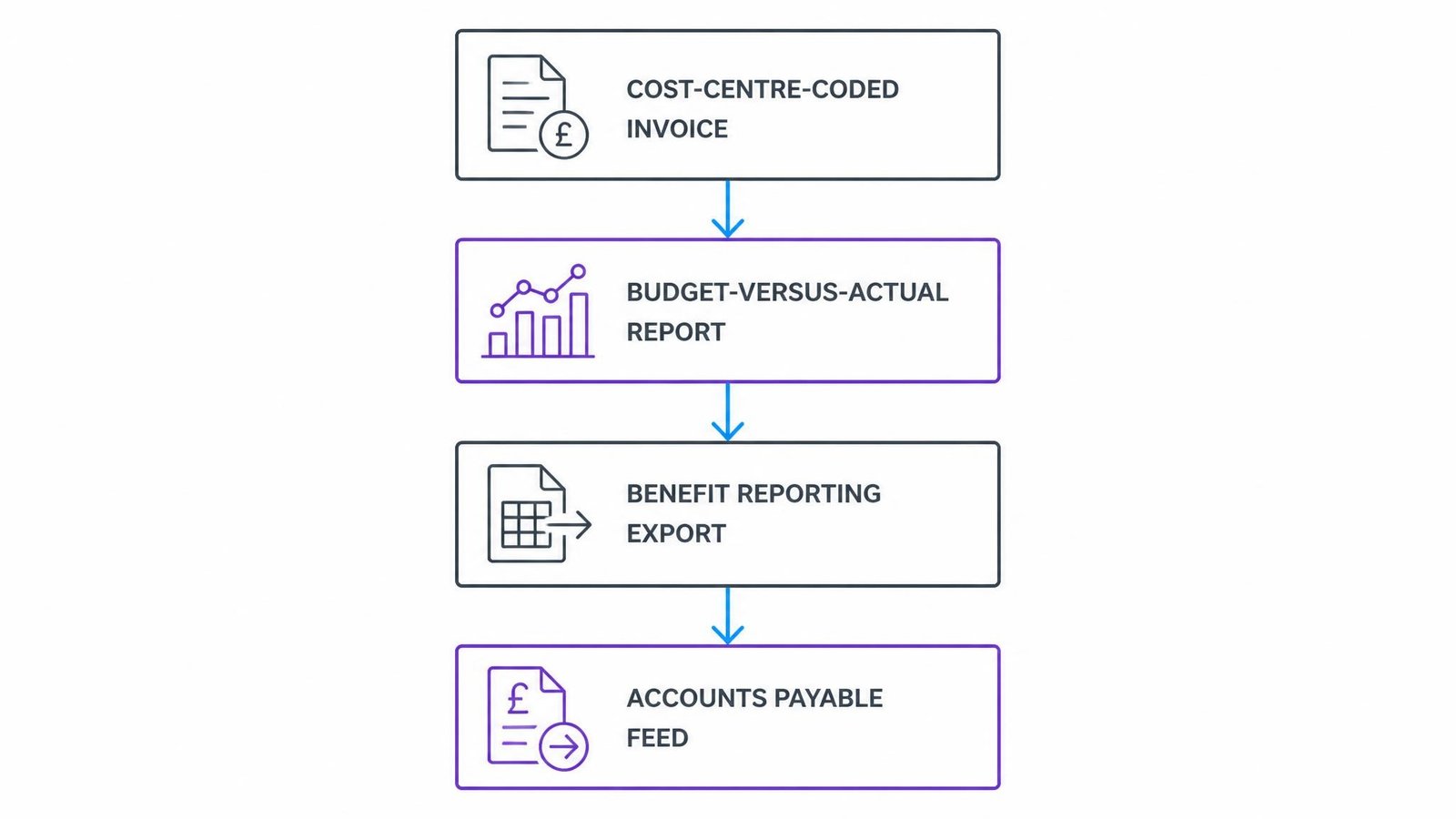
Fleet data is trusted outside the fleet function when it arrives in a form finance can use. Four outputs matter, and each answers a different question.
Cost-centre-coded invoices. Each fleet invoice carries its cost-centre coding before it reaches accounts payable, so spend lands in the right department without rekeying.
Contract checks on invoices. Each charge is compared with what the contract says it should be, the core of fleet invoice reconciliation. This tells finance whether the supplier billed according to the agreed terms.
Budget-versus-actual reporting. Actual spend compared with the budget at vehicle and department level. This tells finance whether the fleet is spending to plan. It is a different question from the contract check: an invoice can follow the contract exactly and still take a department over budget.
Accounts payable feeds. Invoices flow to accounts payable without manual re-entry. Charges that pass the automated checks can be routed for approval; exceptions go to a named person, who can approve, dispute or authorise them separately.
Benefit reporting exports, covering driver, vehicle and period, complete the picture for payroll.
These records are also the foundation for Fleet FinOps. Fleet FinOps is the financial management discipline of identifying, validating, recovering and optimising fleet spend using operational, contractual and financial data. At OviDrive, Fleet FinOps capability sits with OviDrive Enterprise and OviDrive Managed Services.
Yes. Some systems focus on reducing administration rather than adding features: fewer fields, clear reminders and a quick route from question to answer. OviDrive Essentials is designed for this reader, giving people in HR, finance or procurement accessible records and visible deadlines without needing specialist fleet knowledge.
Typically through cost-centre-coded invoices, contract checks on charges, budget-versus-actual reporting, benefit reporting exports and a feed to accounts payable. What is automated, and what needs approval by a named person, depends on the system and how it is set up.
Telematics is a data source: it captures location, distance and driving behaviour. Fleet management software holds the records and runs the processes, and it can use telematics data as one input. A company-car fleet can manage its contracts and costs with little telematics, but not without contract and cost records.
When keeping the spreadsheet accurate takes more time than it saves, or when renewals, invoice differences and driver changes are regularly found after they have caused a cost rather than before. Several suppliers, countries and contract types bring that point forward.
Before evaluating any system, check what your current records contain. Can you produce a list of every active lease with its end date, contracted kilometres and monthly rental? If not, that is where to start.
OviDrive offers different routes depending on the fleet:
See OviDrive's fleet management software, what it is designed to deliver and OviDrive's fleet services.
For savvy fleet managers looking for the latest trends and opportunities to improve their fleet's performance.


Copyright © OviDrive Group of Companies • Made with 💜 in Australia 🦘 • Operating in 36 countries and 3 continents 🌎
